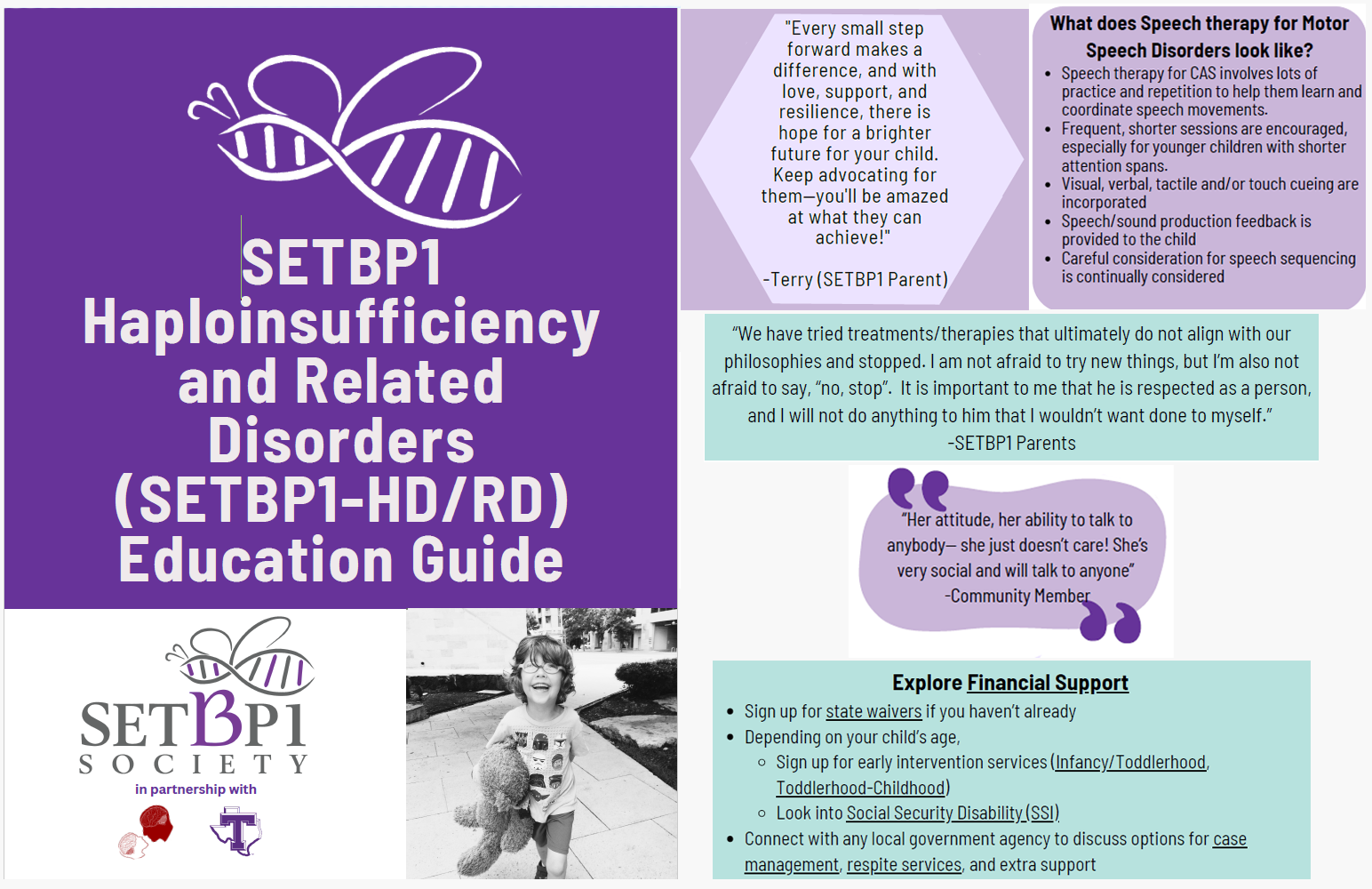
SETBP1-HD/SETBP1-RD Education Guide
My name is Sophie, and I’m a clinical-community psychology Ph.D. student at the University of South Carolina in the Brain Research Across Development (B-RAD) Lab under the mentorship of Dr. Caitlin Hudac. Many of you may know me from doing EEGs with your children at the 2024 Family and Researcher Conference, 2025 Million Dollar Bike Ride, or in your homes as part of the B-RAD Lab BIOGENE study.
When I started graduate school in 2024, I was eager to study rare genetic conditions and use brain-based tools to understand how people grow, learn, and regulate their emotions. To my surprise, my very first project wasn’t about the brain at all; I needed to get to know the SETBP1 community and learn how I could support families directly. That’s when Haley and the rest of the SETBP1 community welcomed me in. Through conversations in formal meetings, in between talks at events, while setting up our EEG equipment in a living room or a kitchen, or at the zoo, one thing became very clear: how difficult it can be to find, organize, and keep track of resources despite the immense effort from families. Based on results from a SETBP1 parent survey conducted as part of a previous SETBP1 Community Research Study (SCoReS), a proposal was developed to provide resources. Building on this, we decided to create a single, accessible guide that brings together as many resources as possible in one place.

I have had the privilege of talking with families, professionals, and researchers to learn what information would be most helpful. Many of you pointed me to resources, shared your stories, or contributed quotes that became my favorite part of the guide. With invaluable support from Haley and the B-RAD Lab team (especially Liv Mace, Wae Man Chan, and Ashlan Cheever), we gathered information from scientific articles, SCoReS research, other rare communities, and, most importantly, the voices of SETBP1 families themselves to create the SETBP1-HD/RD Education Guide.
This guide covers genetics, co-occurring conditions, therapies, education, advocacy, caregiver self-care, siblings’ experiences, developmental stages, and more. While no guide can ever contain everything, our hope is that this one makes a new diagnosis, a new developmental stage, or a new challenge feel just a little more manageable. Thank you to every family who trusted me with your time, stories, and insights—and a special thank you to Haley, without whom this project would not exist. This guide is for you and because of you.